A branded clothing store that pulls its catalog from the supplier on its own
A storefront for Ukrainian clothing and accessories resale: products, photos, sizes, and stock come from the supplier's catalog, and the site shows only what's in stock. Cart, checkout, and two language versions built in one day.
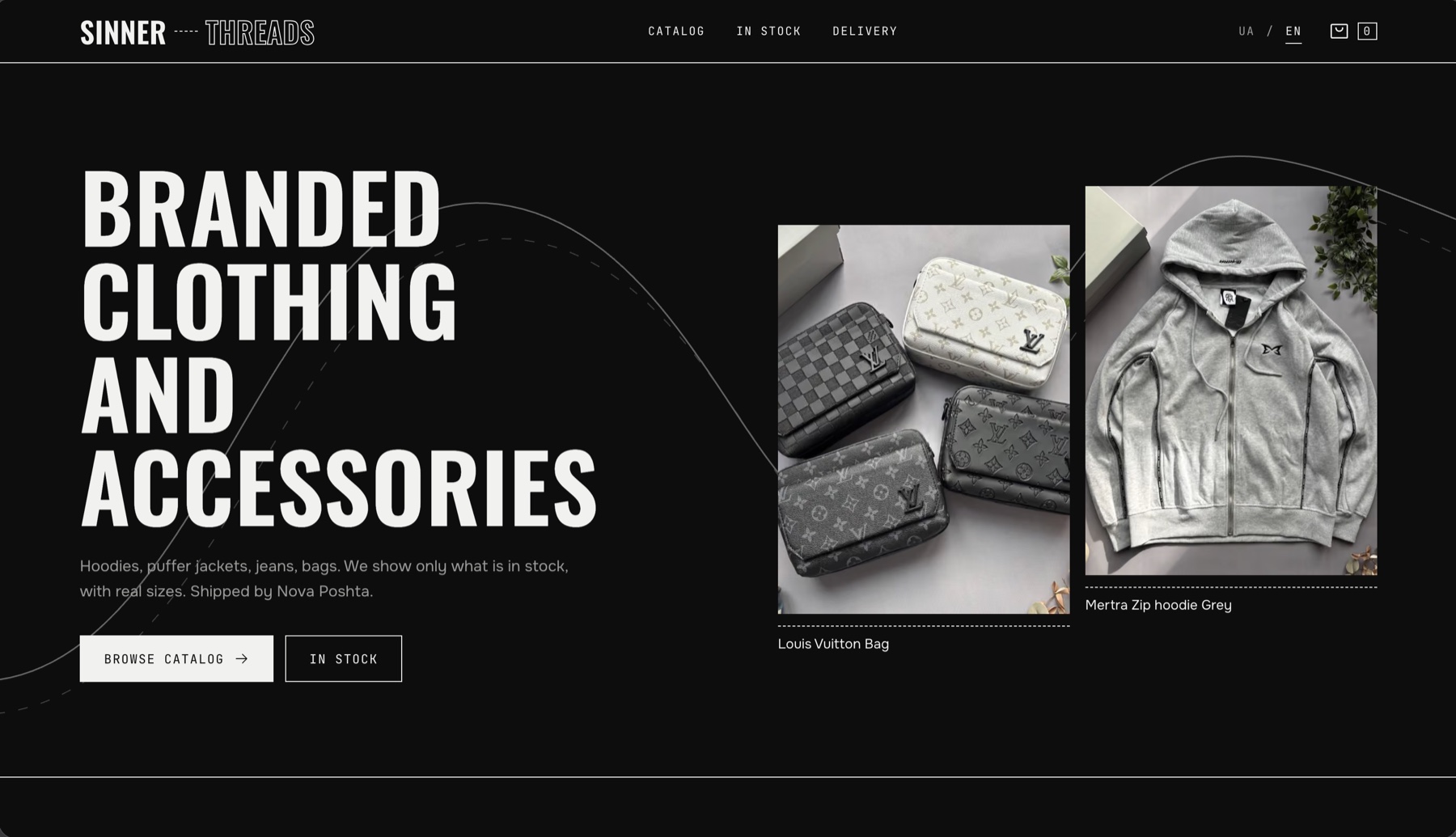
sinnerThreads: storefront with in-stock products, UA / EN
The problem
A resale store for branded clothing and accessories in Ukraine runs on dropshipping: the goods sit with the supplier, and the seller only displays them and takes orders. Keeping such a catalog by hand means rewriting photos, sizes, prices, and stock every day.
The buyer is mostly on a phone and wants to see three things right away: what exactly is for sale, whether their size is available, and how it gets to them (delivery by Nova Poshta). The store had to answer this on the first screen and not need manual upkeep.
The solution
We built a store where the catalog lives in the supplier's system and the site only displays it, cleanly and honestly.
A catalog with no manual work
The whole storefront comes from a single request to the supplier's API: categories, photos, sizes, stock, and prices. Data is cached for 15 minutes, the same as in the supplier's own system. Items without photos, bundles, and packaging are filtered out, so the storefront always looks tidy.
Price and availability under control
The buyer sees the supplier's recommended price, or, if there isn't one, the purchase price plus a markup. The cart is stored on the server: prices and stock are re-checked on every change and again at checkout, so a price can't be tampered with in the browser.
Checkout
Cash on delivery works right away, and card payment is connected through LiqPay or WayForPay. The order is created in the supplier's CRM and goes on to them for packing and shipping.
A storefront that sells with the product
The first screen shows what's for sale straight away: a large headline and real products in stock, with no abstract imagery. Size and availability are visible everywhere a product appears, and out-of-stock items are shown greyed out rather than with a badge on the photo. The design is black and white, with dashed "seams" instead of cards and shadows, an animated thread in the background, and a category carousel.
Two language versions
Ukrainian by default and a full English version at /en, with a language switcher and separate metadata for search engines.
Technology
Next.js, React, and Tailwind CSS. The catalog and orders go through the supplier's API (MyDrop), while carts and orders are stored in Supabase (Postgres) with server-only access. Payments through LiqPay and WayForPay, deployed on Vercel. Animations with Motion, Phosphor icons, sitemap and robots for search.
Result
The store runs on Vercel, the catalog updates itself, and the owner doesn't have to maintain product cards or stock. To accept real orders, the seller's details and a payment provider still need to be connected.